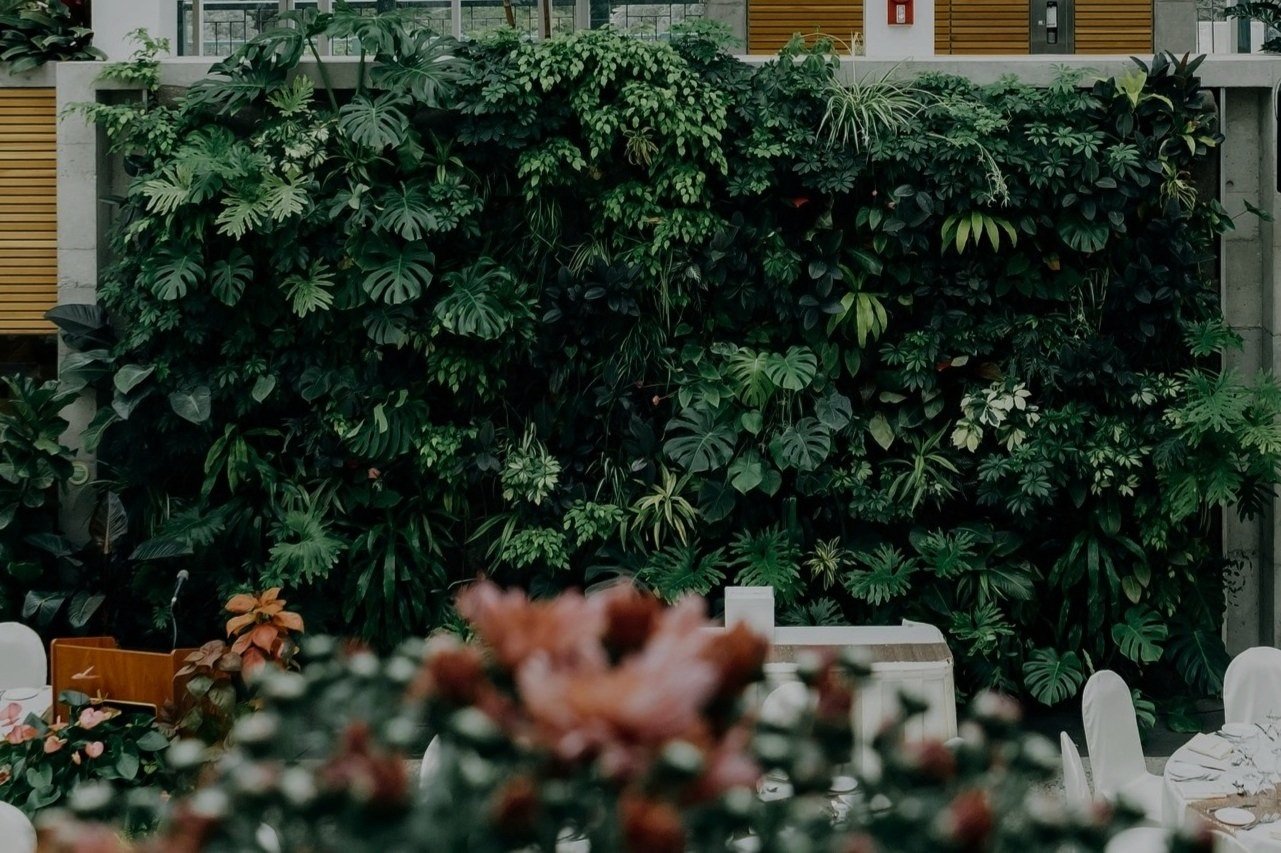
Enhance your environment, with fresh arrangements, decorative planters, or living green walls.
Interior Plants
Use plants to create warm and welcoming environments. Introduce versatile, movable, and constantly evolving design components that are affordable and practical. Decorative containers enhance a room’s overall design without conflicting with existing décor or essential design elements.
Plants offer both practical and aesthetic benefits, and can act as a natural air purifiers. If you are looking to freshen up your office space, enhance your corporate campus, or liven up your home, we have solutions to fit your needs.
Our designs are rooted in cues that are unique to each space, allowing us to develop a customized plan that is sophisticated, imaginative and tailored to each site.

-
Assessment & Consultation - We begin our process with a discussion of your specific needs, your environment, your vision, your budget, your priorities, and your timeline.
Design - We carefully curate a design plan that specifies recommended plants, containers, and accessories, along with a comprehensive caretaking plan. We refine our proposal with your value-added input.
Installation - We manage and provide installation during non-operating hours, from start to finish. This eliminates any disruptions to your home or business.
Caretaking - We lovingly maintain your plants during non-operating hours to ensure they thrive, which includes optional rotations, and any required replacements.
-
Focal Points
Large specimen plants, when used individually, are especially useful for producing good Feng Shui. They create a flow pattern and direct attention towards a specific destination. Colorful foliage and flowering plants, when used alone or in large groupings, catch the eye and benefit spaces by helping to lead foot traffic, affecting how quickly people move through walkways.
Screening & Framing
Plants act as picture frames, and draw attention to specific objects or destinations. Whether framing a doorway, elevator, entrance, or piece of artwork, plants draw awareness from the inside area to the outdoor space. Plants can be used to block views of unsightly equipment, or screen off areas while maintaining a calm sense of space.
Depth & Delineation of Spaces
Plants interrupt big, empty spaces, and create visual depth. Plants help break up spaces into smaller, more intimate areas, whether implemented as room dividers or portable walls.
Lowering Ceilings
Plants provide a false ceiling for areas with extreme heights. By introducing a large specimen tree to a large atrium, this visually lowers the ceiling height and reduces the perceived overhead space, creating a more intimate and less exposed environment.
Color & Interest
Plants add color to monotone settings with their varying shades of green, combinations of texture and vivid appeal. Plants add visual interest in subtle to dynamic ways, depending on their implementation.
Improved Value & Economics
Plants provide a feeling of luxury and added value to a space. Subconsciously, people associate plants with success and consumers tend to linger and spend more time, and therefore money in plant-filled environments.
Ambiance
Plants add to the overall design and enhance the man-made environment. Plants, their containers and feature green walls are integral accessories to interior design, and help define the feel of a general space. Plants add ambiance to complement the existing architecture.
Healthy Environments
Plants help to remove hazardous Volatile Organic Compounds (VOCs) such as benzene, trichloroethylene, formaldehyde, and bioeffluents (nitrogen, carbon dioxide and viruses exhaled by humans). Potted plant microcosms (the individual plant, its soil microbes, soil medium and root system) are effective at removing toxic VOCs whether day or night.
Office occupants experience 40% fewer coughs, 30% fewer sore throats, 30% fewer headaches, 25% fewer dry skin irritations and 20% fewer fatigue, and an astonishing 60% reduced sick leave when working in plant-filled environments. Plants assist in humidity and temperature control, and also reduce dust levels.
Increased Well-Being & Productivity
Plants create restorative environments and improve our overall sense of well-being. Plants reduce attention and fatigue, improve focus, reduce stress, and provide feelings of calm. Plants enhance productivity and increase workplace satisfaction.
-
Indoor plants can reduce stress levels by creating a soothing and natural environment.
Real plants can help enhance attentiveness and concentration.
Horticultural therapy, or indoor gardening, has been found to be therapeutic for individuals with depression and anxiety, as well as dementia and other conditions.
Plants and flowers can expedite the recovery process of individuals who are recuperating from illnesses or surgeries.
https://www.researchgate.net/publication/252307449_Health_Benefits_of_Gardens_in_Hospitals
Plants within the workspace improve productivity, creativity, and decrease stress.
https://journals.ashs.org/hortsci/view/journals/hortsci/42/3/article-p581.xml
Natural elements, including indoor plants, can enhance job satisfaction, commitment, and buffer the effects of job stress and anxiety.
Indoor plants help purify indoor air and remove volatile organic compounds (VOCs) through a process called phytoremediation.